The plain-English guide.
What is an AI software factory?
An AI software factory is an ecosystem of purpose-built apps on your own machine that lets you build, iterate and market new apps: agent teams from multiple providers, guided by playbooks that improve with every project.
The parts.
At the center sits a team of coding agents, deliberately from more than one provider: Claude Code, Codex CLI, Gemini CLI, Grok Build, Kimi CLI. Different models are good at different jobs, and a factory routes each task to the right one. Around the agents: sandboxes (disposable microVMs where risky work runs safely), publishing (Next.js, Vercel, Expo for iOS and Android), media generation (Replicate, fal), and a marketing kit for what happens after launch.
Everything runs locally, under your accounts and your keys. That is the difference between owning a factory and renting a seat. The pattern owes a lot to the open-source, self-hostable world, projects like Openship, which proved you can own your whole deployment pipeline.
How a build runs.
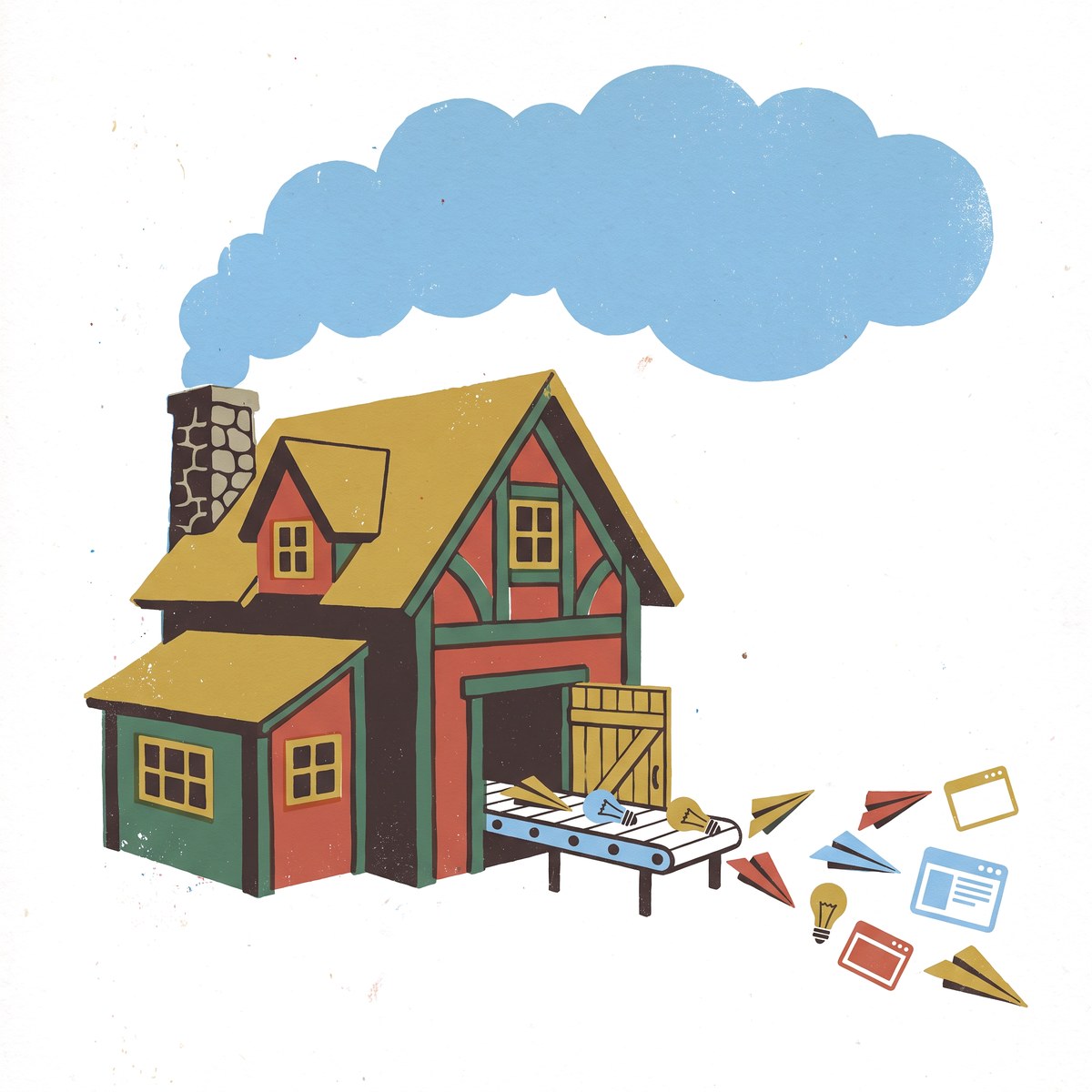
A project starts with planning: a written spec the agents build against, so you stay in control of what gets made. Then the first build, which is fast and usually eighty percent right.
The real work is the last twenty: intensive cycles of iteration and reprompting until everything is high quality and actually working. Agents critique each other's output, evals check the results automatically, and the loop keeps turning until the checks pass. This is the part app-builder demos skip, and the part that separates a toy from a product.
The playbooks.
A factory is more than tools: it carries playbooks and workflows for nearly everything a builder meets. How to start each kind of app: mobile, web, SaaS, stores, APIs, games. And the senior engineering practice that keeps software alive, at the code level and the systems level: when a webhook beats polling, when a queue is worth it, when a KV store is enough and when you need a real database.
It learns: DRY becomes DRM.
Engineers have an old rule called DRY: don't repeat yourself. A factory extends it to DRM: don't repeat mistakes. Every fix, every dead end, every lesson gets written back into the playbooks, so no problem is solved twice. The factory you run next month is smarter than the one you run today.
Factory vs app builders.
App-builder platforms like Lovable, v0, Bolt, Replit and Emergent put the same class of AI behind a hosted subscription. Good for a quick demo. A local factory is roughly ten times better, and puts you on the level of a pro dev shop. It wins on the things that matter over time:
Ownership. The code, keys and data are yours; there is no platform to outgrow or get priced out of. Speed and control. Everything runs on your machine, not behind someone's queue. Ceiling. Builders are made for simple apps; a factory handles real systems, higher value and higher complexity: APIs, queues, background agents, native mobile.
Can a non-technical person run one?
Yes. The tools are friendlier than they look; what most people are missing is expert setup and a couple of days of guidance. It is not set-and-forget: the factory makes you effective, and you are the one driving it. That is the part we do: two senior engineers fly to you, anywhere, and set the whole factory up at your table in two days, at the $5,000 founding rate, travel included. That is what taking part in the AI era actually looks like: not watching it, building in it.